
General classification of industrial presses
Industrial presses are classified according to the slide-drive type. On this basis four main families can be distinguished. Mechanical presses are the most productive in the cold forming of sheet metal and form the core of any die shop or high-volume stamping plant.
Mechanical presses
The slide is driven mechanically: crank-and-connecting-rod, eccentric shaft, screw with friction discs, knuckle joint or wedge. Energy is stored in a flywheel and released to the slide on each cycle through a clutch. They are the most productive machines for the cold forming of sheet metal.
Hydraulic presses
An electric motor drives a rotary pump that supplies pressurised oil to the working cylinder. The force is independent of slide position and can be developed at any point of the stroke. Ideal for deep drawing, open-die forging and the extrusion of long parts.
Pneumatic presses
They use compressed air (4–10 bar) as the working fluid. Simple to install and with no risk of oil contamination. Limited to forces of up to 500 kN; used for assembly, bush insertion, riveting and sealing in pharmaceutical or food environments.
Forging hammers
They work by impact kinetic energy: a falling mass strikes the hot metal billet (850–1,250 °C), deforming it until it fills the die. Counterblow hammers drive both rams simultaneously in opposite directions. Impact energy up to 1,500 kJ.
Within mechanical presses there are further classification criteria: frame construction type (single upright, two uprights, four columns) and number of actions (single, double, triple).
For cold blanking and stamping of medium and long runs, the mechanical press offers a higher production rate, a lower cost per part and better compatibility with automatic strip-feed systems than any other alternative. ESNA manufactures eccentric mechanical presses in C-frame (30–315 t) and straight-side (up to 400 t) configurations.
Screw presses (friction)
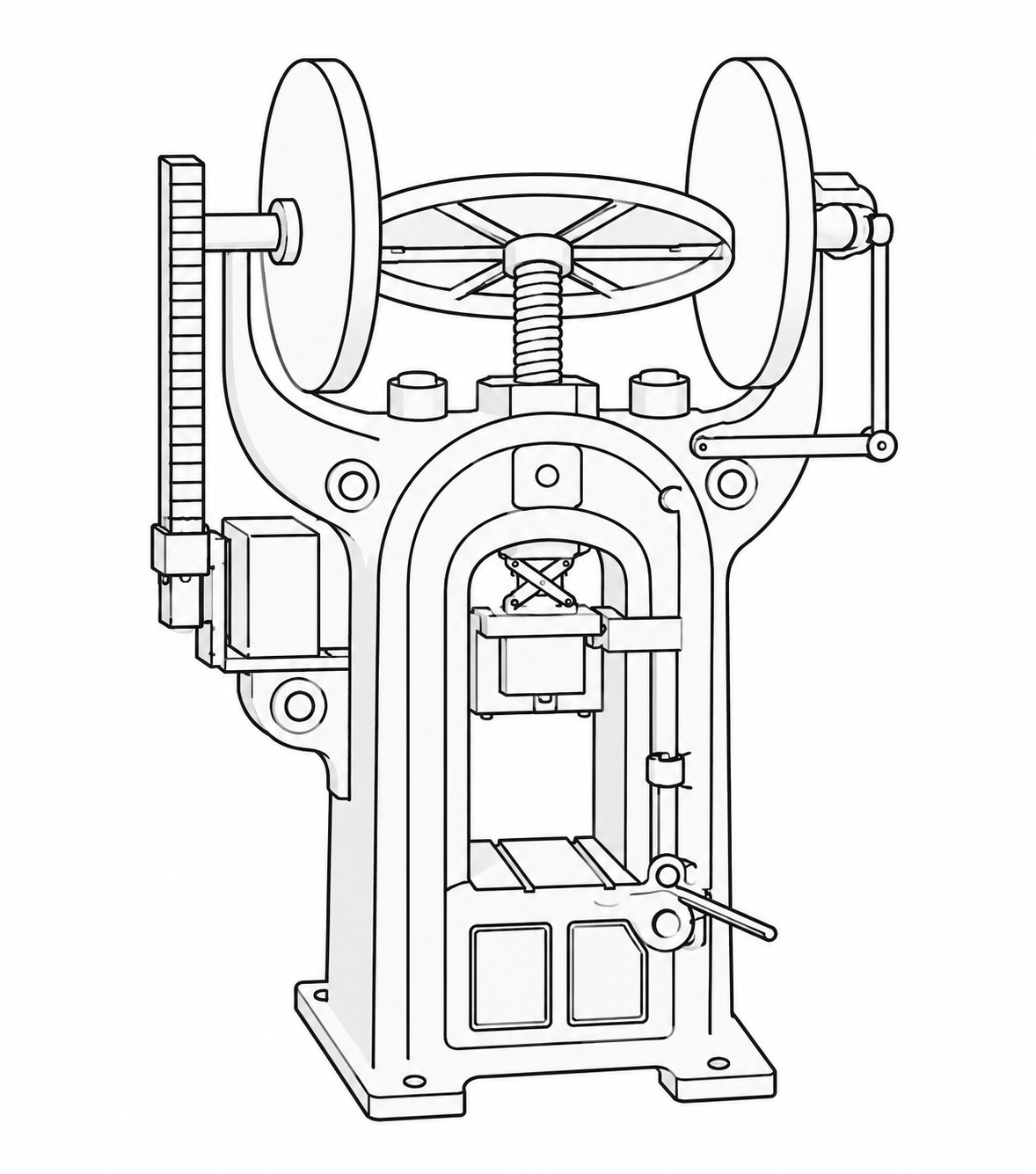
In screw presses, also known as friction presses, the slide moves up and down by means of a threaded screw. The most common type is the two-friction-disc press: an electric motor drives, through belt and pulley, the shaft on which two friction discs are keyed; these are pressed alternately against the flywheel. Depending on which disc contacts the flywheel, it turns one way or the other, raising or lowering the slide through the screw.
The screw press is essentially an energy-restricted machine: neither the stroke nor the force can be set freely; what can be set is the kinetic energy accumulated in the flywheel before the cycle. This means that for very short working strokes strong overloads can be generated, capable of damaging the uprights or the screw itself.
The most modern variant is the direct servo-electric drive, in which the motor rotor and the flywheel form a single unit with no friction discs: motion is transmitted by magnetic field, raising efficiency to 70% and allowing braking energy to be recovered. These are used in coining, sizing, straightening, bending and hot stamping.
Eccentric mechanical presses
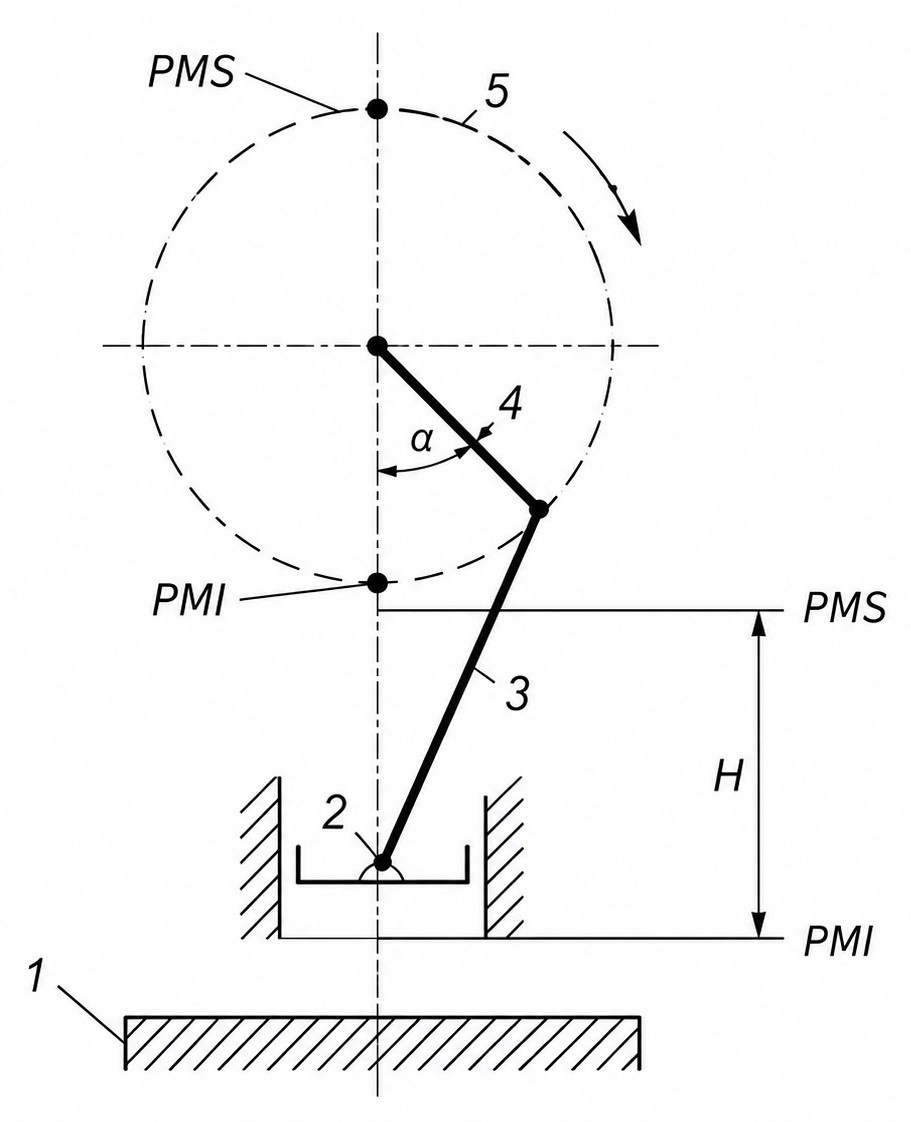
In eccentric presses, also known as crank-type mechanical presses, the rotary motion of the eccentric shaft is converted into reciprocating linear motion of the slide by a connecting rod. The energy accumulated in the flywheel is transmitted to it through the clutch, usually engaged by a foot pedal or two electric push-buttons. The brake is essential to stop the crank mechanism once the crank and connecting rod have reached top dead centre.
Classification by frame construction
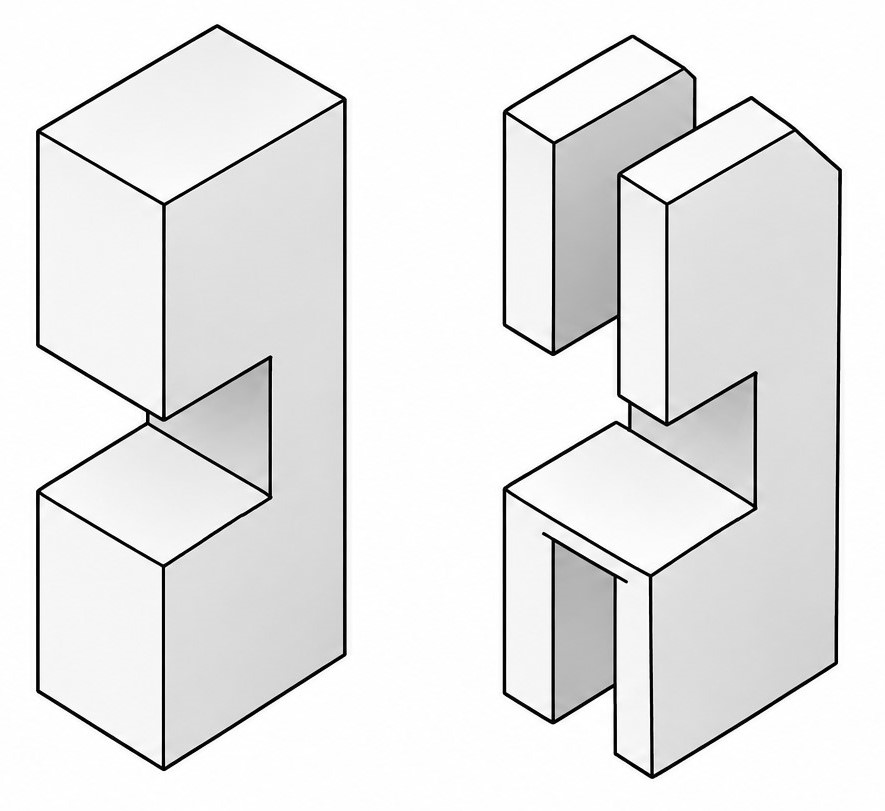
The frame can be built in a single piece — the front-type press proper — or in two welded pieces forming a double frame. The great advantage is accessibility from three sides of the working area, which makes lateral automatic strip feeding, part evacuation and tooling setup easier.
The downside is that the C opening produces an angular deflection of the frame under load that reduces the parallelism between slide and bed. They are the standard choice up to 315 t.
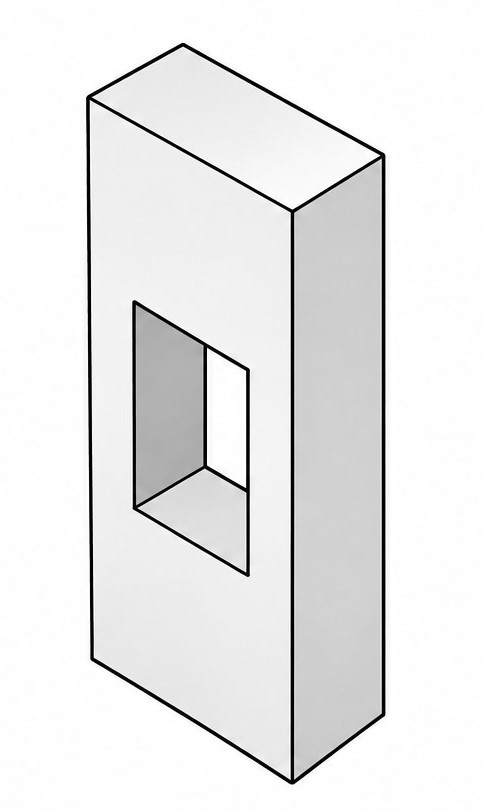
Straight-side presses have the eccentric shaft supported at both ends, eliminating the angular deflection of the C-frame. They can have one, two or four connecting rods transmitting motion to the slide. The four-rod construction ensures uniform force distribution across the whole bed, essential in deep drawing, the blanking of large parts and stamping in general.
These are single-upright presses whose frame can be tilted from the vertical, making it easier for the finished part to fall clear by gravity towards the rear. They can be driven by direct flywheel or by geared reduction.
Press types by number of actions
According to the number of actions, a press is described as single-, double- or triple-action.
In a double-action press, the outer slide acts as a blank holder and the inner slide as the punch, driven by independent systems. This configuration is the industry standard for deep drawing of sheet metal: the blank holder controls the flow of material into the die to prevent wrinkling, while the punch performs the draw.
The triple-action press adds a central punch that enters the die cavity from below, used for very deep draws and the forming of curved bases.
Knuckle-joint presses
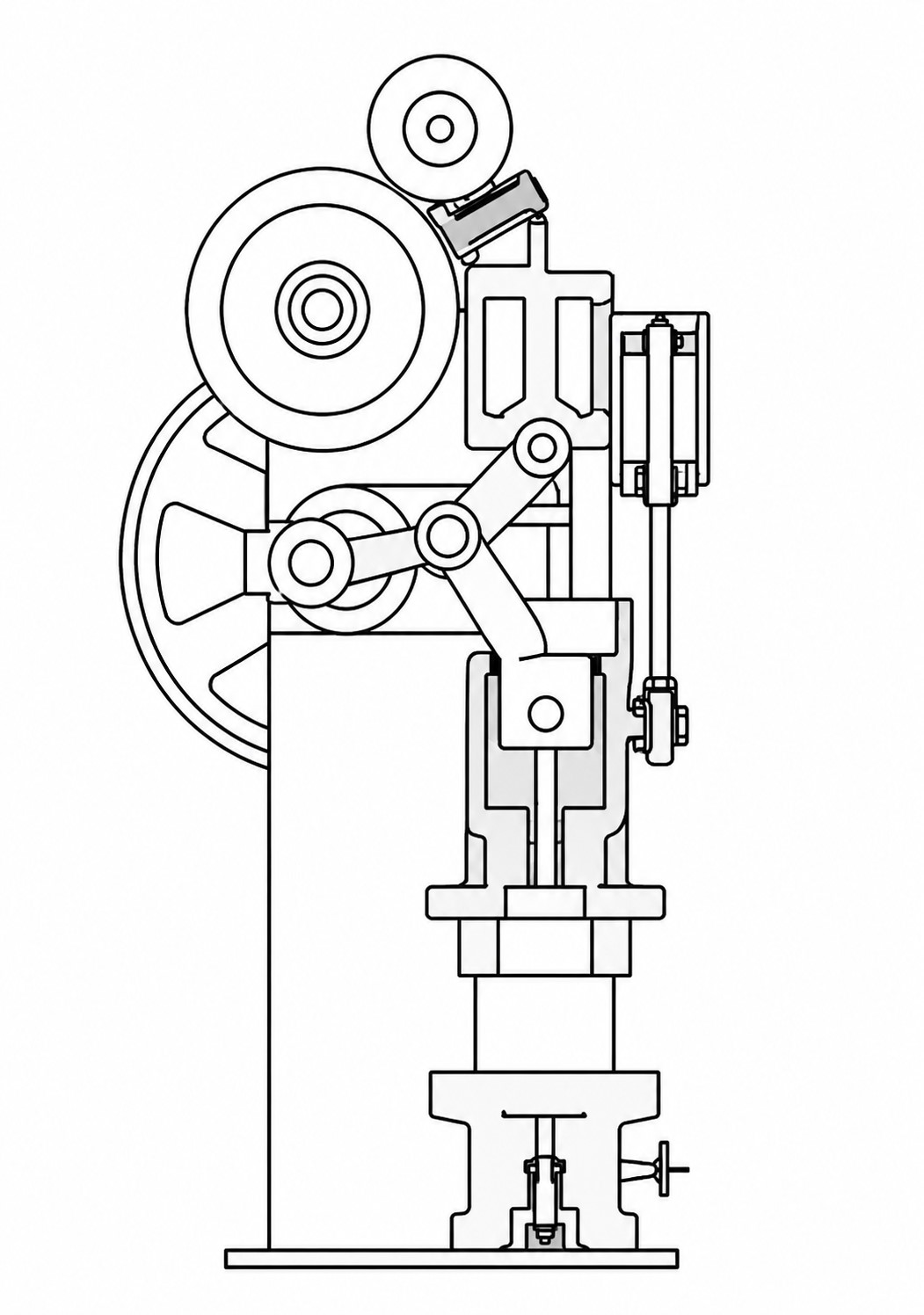
Knuckle-joint presses are a variant of crank presses in which force is transferred to the slide through a knuckle-joint mechanism: two arms articulated together at one end, one fixed and the other linked to the slide at the opposite ends. When the crank pushes the pivot point, the arms tend to align and generate a force on the slide far greater than the one applied.
The main characteristic is that the nominal force is available only 3 or 4 mm before bottom dead centre, corresponding to a crank angle α = 32°. For larger stroke values the force falls off rapidly. They are the optimum solution for very high forces over very short working strokes: coining, sizing and the direct extrusion of short parts.
The toggle-lever variant (double articulation) allows the slide travel to be 3 to 4 times greater than in an equivalent eccentric press, with slower motion near bottom dead centre. It is used in the cold extrusion of long parts and the forming of thin-walled tubes, with forces from 4,000 to 16,000 kN.
Wedge presses
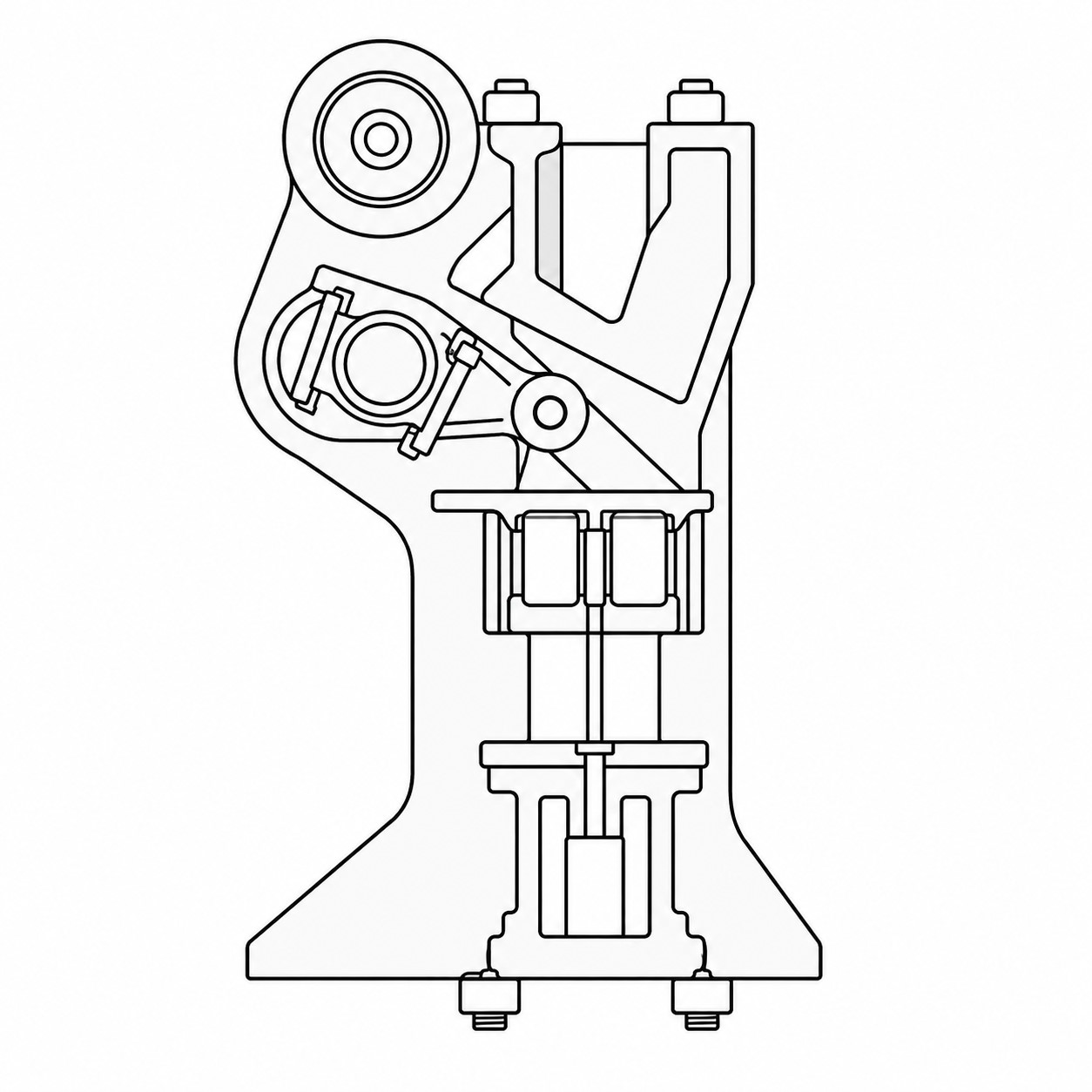
Wedge presses are a type of crank press in which the slide is not pushed directly by the connecting rod but through a wedge acting on the top surface of the slide. The connecting rod pushes the wedge horizontally and, through its angle of inclination, the wedge generates a vertical force component on the slide that drives it downward.
The main advantage is that the wedge bears uniformly on the entire top surface of the slide, preventing the lateral bending that occurs in conventional crank presses. This translates into greater rigidity, lower lateral loads on the guides, higher dimensional accuracy of the part, longer die life and better stroke adjustment. The largest wedge press built for stamping has reached a nominal force of 80 MN at a rate of 60 spm.
Horizontal forging presses
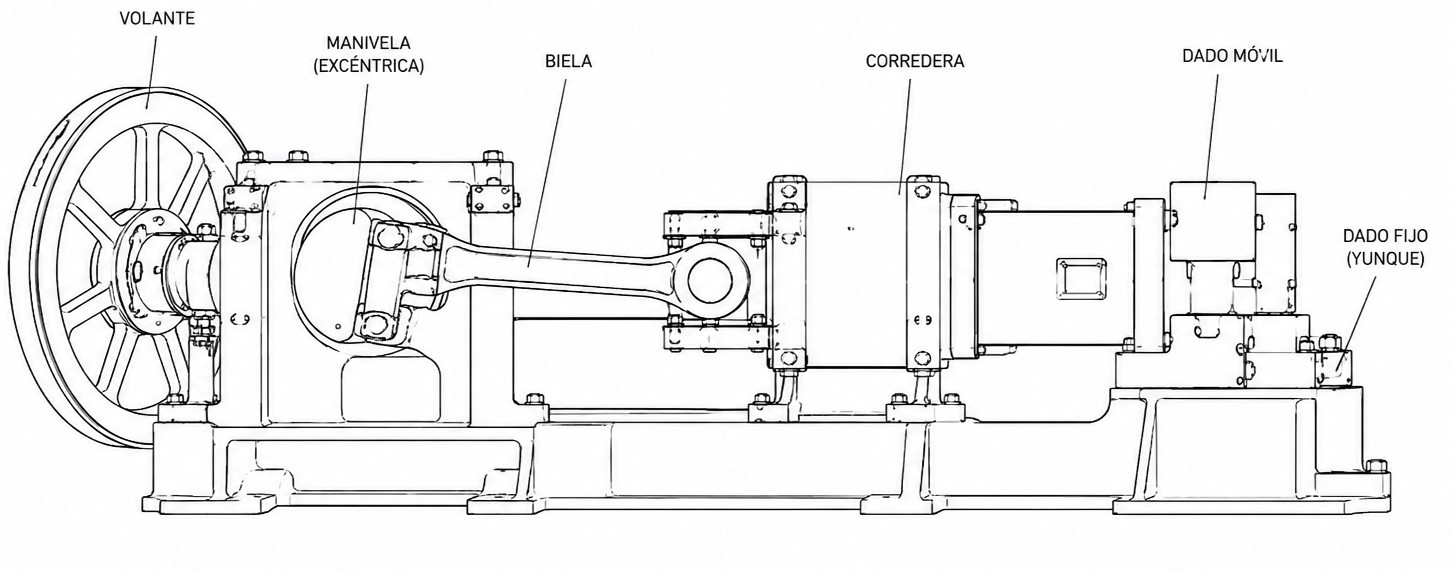
Horizontal forging presses (upsetters) are crank-type mechanical presses with a knuckle-joint mechanism in which the slide and the punch move horizontally. The operator positions the part using the foot control; the slide determines the closing of the gripping die through a cam system. The punch contacts the part only after the gripper has closed.
Compared with conventional crank presses, they work with higher speed and greater precision. Their main drawback is high tool wear and long machine setup times. Their principal application is open-die forging: upsetting, piercing and drilling of coarse billets, semi-finished stock and finished parts.
High-speed automatic stamping presses
High-speed automatic stamping presses are closed-frame eccentric presses designed specifically to run at extreme rates — up to 1,800 spm — with thin, high-precision sheet-metal strip. At these speeds, the inertia forces must be compensated by a mass-balancing system when the slide plus the upper tooling exceeds 200 kg.
The optimum solution is the four-column guiding system, which achieves pitch accuracies of 0.01 to 0.02 mm. They are used for punching magnetic laminations for electric motors, electronic connectors and precision parts in continuous strip.
Press brakes
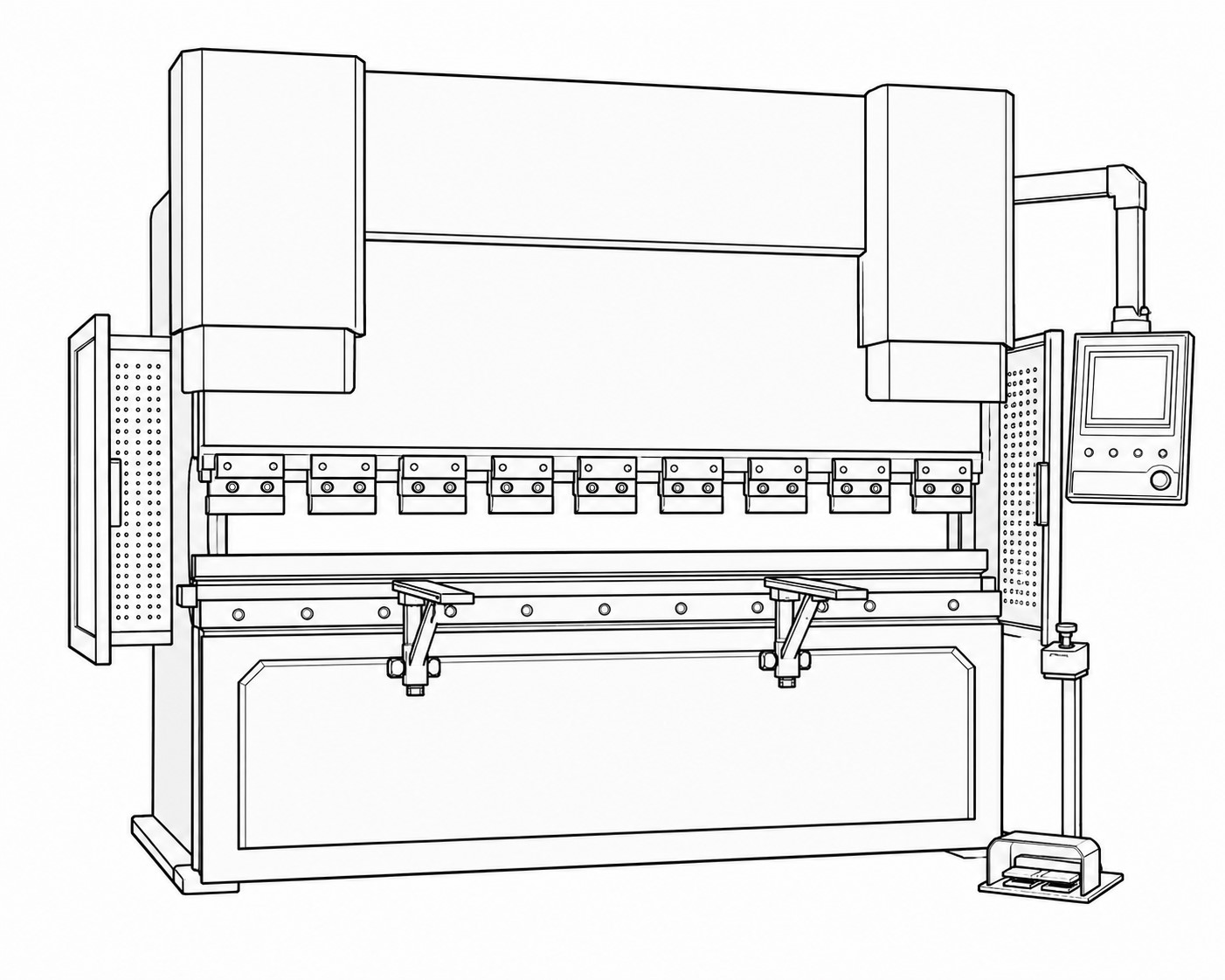
Press brakes are forming machines specialised in the bending of sheet metal. Although they are usually classified as hydraulic presses, mechanical crankshaft variants exist. Their essential feature is the great length of the slide and bed — generally 2 to 4 m — which allows long parts and high-quality straight bends.
Modern hydraulic press brakes incorporate numerical control that programmes the bending depth, the speed and the position of the back gauge. With nominal forces from 800 to 4,500 kN and a maximum rotation angle of 120°, they cover everything from thin precision sheet to thick structural plate.
Applications by press type
The table below sets out the characteristic fields of application of each press type and the industrial sector in which it predominates.
| Press type | Characteristic applications | Sector / process |
|---|---|---|
| Screw presses | Straightening, bending, roll forming, hot stamping, sizing, coining | Precision forging, tooling, silversmithing |
| Eccentric presses | Blanking, piercing, shearing, deep drawing, bending, roll forming, extrusion of short parts | Automotive, appliances, die shops, electronics |
| Knuckle-joint presses | Backward extrusion, coining, sizing, direct extrusion of short parts | Precision components, defence |
| Toggle-lever | Cold extrusion of long parts, forming of thin-walled tubes | Automotive, defence, precision extrusion |
| Wedge presses | Stamping, cold forming | High volume, automotive, large series |
| Horizontal forging presses | Open-die forging, upsetting, piercing and drilling of billets | Industrial forging, semi-finished stock |
| Hydraulic presses | Straightening, deep drawing, draw-stretching, open-die forging, extrusion of long parts | Aerospace, composites, structural aluminium |
| Automatic stamping | Precision punching, magnetic laminations, connectors, terminals | Electronics, automotive, continuous-strip CNC |
| Press brakes | Sheet bending, forming of profiles, edges and angles | Fabrication, structural metalwork, short runs |
Do you need a press for your process?
Tell us what parts you make, in which material and to what tolerances. We will advise you on the right type and tonnage, with no obligation.
Frequently asked questions about press types
Mechanical presses are grouped into five families according to the slide-drive mechanism: screw presses (friction), eccentric or crank presses (single-upright, straight-side, inclinable), knuckle-joint presses, wedge presses and horizontal forging presses. Within each family there are variants by number of actions, upright arrangement and clutch type.
The eccentric press is the most versatile and widely used machine in cold forming. It is used for blanking, piercing, small and medium deep drawing, sheet bending, roll forming and the extrusion of short parts. Its nominal force ranges from 0.1 to 100 MN, with rates of up to 150 spm on the fastest models.
The single-upright press (C-frame or gap-frame) has a frame open on three sides, which makes automatic strip feeding easier; its C opening introduces lateral deflection under load that reduces slide parallelism. The straight-side press has a closed frame, greater rigidity, and is the obligatory choice for forces above 4 MN or deep drawing where strict parallelism is required.
The knuckle-joint press is a crank-type mechanical press in which force is multiplied through a mechanism of two articulated arms. Its key feature is that nominal force is available only in the last 3–4 mm before bottom dead centre (α = 32°). It is ideal for coining, sizing and the direct extrusion of short, high-precision parts. It is not suitable for deep drawing or long-stroke operations.
The wedge press eliminates lateral bending of the frame because the wedge bears uniformly on the entire top surface of the slide. The result: greater rigidity, lower lateral loads on the guides, higher dimensional accuracy, longer die life and better stroke adjustment. The largest wedge press built for stamping has reached 80 MN at 60 spm.
Efficiency depends on the type: the traditional two-friction-disc screw press reaches 28%; the Vincent press with bevel wheels only 15%; the direct-drive servo-electric press (rotor + flywheel as a single unit, with no discs) reaches 70%, making it the most efficient and the only one able to recover braking energy.